

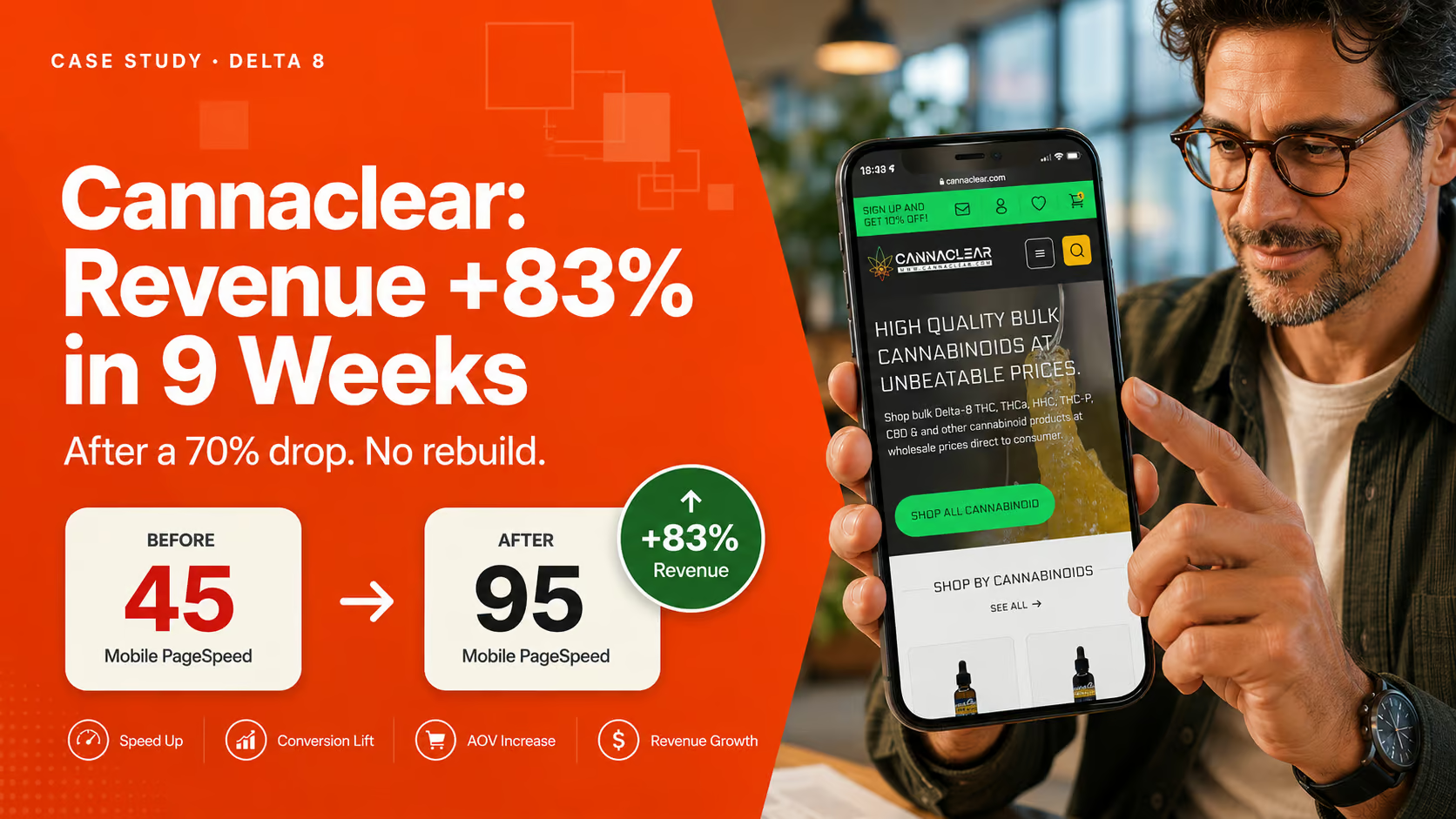
When Devin Adams of Cannaclear first spoke to us, his store’s revenue had dropped 70% over twelve months. Twelve months earlier the business had been performing strongly. By the time we spoke, he didn’t know exactly why it had collapsed – only that it had.
His Google Analytics had been broken for six to eight months. He didn’t know. He thought his monthly traffic was 70,000 visitors. The actual number was very different. He estimated his conversion rate at 1.8%. Once we restored analytics, it was closer to 0.6%.
He’s a web developer himself. Three years building Cannaclear from scratch, alone, running organic from Reddit and one Twitter ad at $5 per click that wasn’t performing. Facebook and Instagram had refused his ads – Delta 8 sits in the same restricted-vertical category that pushes hemp and CBD merchants away from mainstream ad platforms.
When we asked what had stopped him addressing the problems himself:
“I’m afraid I’ll break something.”
Devin Adams, Founder, Cannaclear
When we asked how the revenue drop had affected him:
“It makes me sad.”
Devin Adams, Founder, Cannaclear
This is more common than it should be. By the time most WooCommerce store owners reach us, the loss has stopped being operational. It’s personal.
The TL;DR:
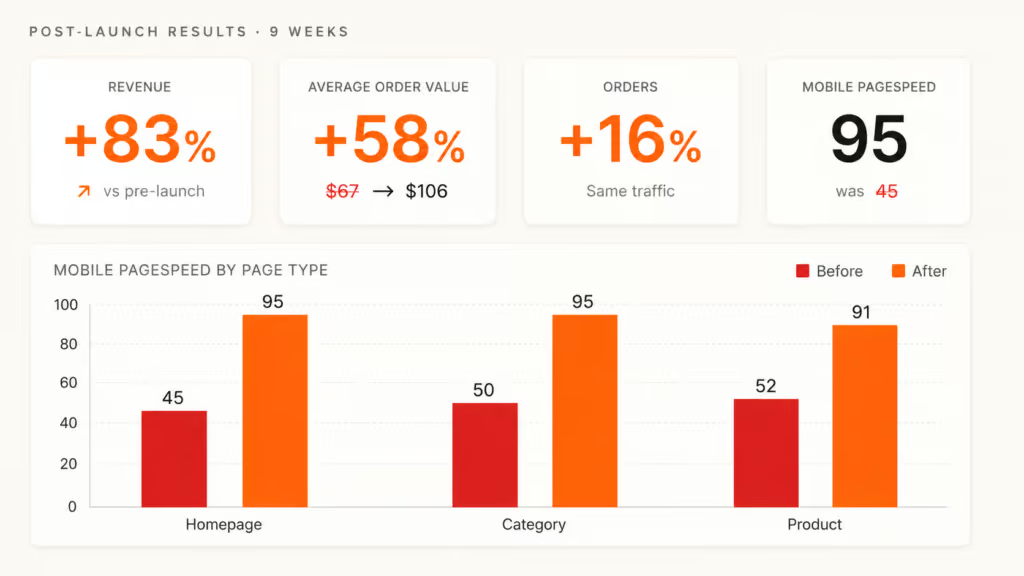
- Revenue up 83% after a 70% twelve-month drop. Orders +16%, AOV +58% ($67.05 → $105.94). Same customers, far more spend per transaction.
- Mobile PageSpeed 45 → 95 out of 100. Self-optimized once a year earlier, then degraded as plugins and products stacked up.
- Owner-developer trap, broken. Devin built the site himself and was afraid to touch it. We resolved the duplicate-orders bug, the duplicate-emails bug, the 800-variant subscriptions conflict, and the broken Google Analytics he didn’t know about.
- Sold him headless. Talked him out of it. Mid-project, after the design phase, we pulled Devin back in and pivoted to a standard WooCommerce build. Delivered the same performance at a fraction of the complexity.
- 9 weeks start to finish. Restricted vertical, no paid ads, owner-developer client. The constraint stack worked against him; we worked around it.
On accessibility: the rework brought Cannaclear’s storefront toward WCAG 2.1 AA expectations – keyboard-navigable category and product pages, readable color contrast on calls to action, descriptive alt text on product imagery, and form labels a screen reader can announce. For a restricted-vertical store leaning on organic search, accessible markup is also cleaner markup: it helps the people who need it and the crawlers that rank the site.
A note before we start: this case study gets into PageSpeed scores, UX failures, and the WooCommerce build underneath them. If that’s your world, the detail is all here. If it isn’t, the short version is simple – we fixed the same store Cannaclear already had, no rebuild, and revenue climbed 83% with average order value up 58% as the same customers started spending more. Skip to the FAQ for what that means for your store.
The owner-developer trap, the restricted-vertical trap, both at once
Cannaclear sells Delta 8 THC products to a US audience. Three-year-old store, built solo, on WooCommerce by necessity – Shopify won’t touch the category, and Facebook and Instagram have permanently restricted ads for it. Organic search and a Reddit presence carried the business through its first two strong years.
Then the revenue chart turned. Down 70% over the next twelve months. Devin couldn’t say exactly why, only that it had happened. The instinctive next step – check the analytics, find the leak – was off the table, because the analytics had been broken for most of that period and he didn’t know.
Two structural constraints framed everything. First, he built it himself – which means every change carried the risk of breaking what was already running the business. Second, restricted vertical – which means he couldn’t spend his way out of a conversion problem. Both constraints, at the same time. Most agencies don’t see one of them in a year; we see both in the same client more often than you’d expect.
What was broken
Our diagnostic process looks at four layers – UX, performance, analytics, and the underlying WooCommerce build – developed across 11 years and hundreds of WooCommerce engagements. On Cannaclear, all four were failing at once. Analytics had gone dark, so the data layer couldn’t show where revenue was leaking. The WooCommerce build was throwing duplicate orders and duplicate emails and breaking on an 800-variant product. Performance had degraded back to a mobile PageSpeed of 45. And the UX of product discovery was working against the customer. For the UX layer we draw on the Baymard Institute’s ecommerce research alongside the patterns we’ve seen across hundreds of stores; against that standard, the storefront rated poorly on both mobile and desktop.
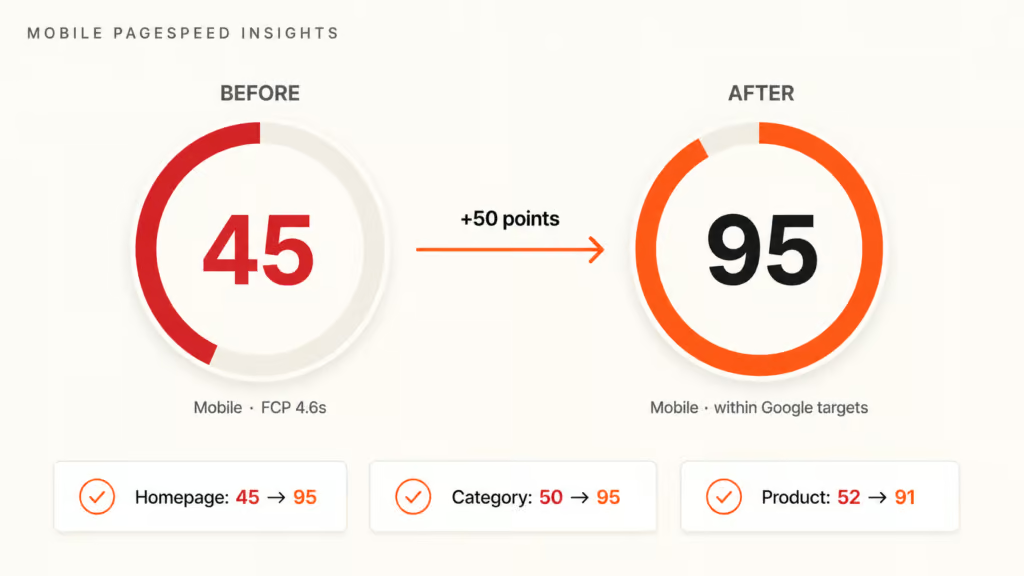
Cannaclear’s mobile PageSpeed score was 45 out of 100. Devin had self-optimized to a 1-second page load about a year earlier. As he added plugins and products, the site degraded back to where it had started.
The technical inventory:
- One product with 800 variants (bulk Delta 8 THC sauce – 50 strains across multiple quantities) that broke completely whenever the subscriptions plugin was enabled
- Duplicate orders being placed at checkout – customers charged twice
- Duplicate fulfillment emails going to customers (logs showed one email; customers received two)
- Google Analytics broken for six to eight months, no one knew
- SEO rankings declining – “Delta 8,” the main commercial keyword, no longer ranking in the first ten pages of Google
That last one is significant. For a restricted vertical that can’t run paid ads, organic search is the primary revenue channel. Slipping out of the top 10 pages for the category keyword is an extinction-level problem.
Why this hadn’t been solved
Devin had never hired a developer – he is the developer. He’d worked briefly with a digital marketing agency at some point for SEO and dev work, but most of the site he’d built himself. The reason the broken things stayed broken wasn’t that no one knew about them. It was that addressing them carried too much risk.
That’s the position a lot of WooCommerce store owners end up in once enough has been built. The site runs the business. The business runs on cash flow. Breaking the site costs orders. So the broken things stay broken – slowly bleeding revenue, never enough on any single day to justify the risk of touching them.
The owner-developer trap is one specific version of the broader pattern we see across the restricted-vertical client base: known problems, unaddressed, because the cost of touching them feels higher than the cost of leaving them. Until the compound damage catches up. Then it doesn’t.
We’ll show you exactly where your store loses revenue.
We audit your store across UX, performance, and conversion, then show you the specific issues costing you orders – each one measured against revenue impact. You get a prioritised list of what’s losing money and what it’s worth to resolve.
- ✓239-point Baymard UX audit
- ✓Core Web Vitals + LCP + CLS benchmark
- ✓SemRush health benchmark
Every finding comes with the revenue it’s costing you and the lift from resolving it. You decide what’s worth doing.
What we did – including the headless pivot that saved Devin six figures
We originally won the project with a headless WooCommerce build as the proposed solution. Contract signed. Design phase began.
Then, mid-project – design phase complete, build phase about to start – we paused and pulled Devin back into the conversation.
The reason: in the months between scoping Cannaclear and reaching the build phase, our recent non-headless projects had been delivering page speed and UX results indistinguishable from headless. This hadn’t been true two years earlier when we’d built our headless platform. What had changed: edge caching maturity, WordPress’s full-site-editing block themes, plugin ecosystem improvements, and our own optimization methodology.
We told Devin we could deliver similar performance outcomes on a standard WooCommerce build – without the complexity, dependency, and ongoing infrastructure cost of headless. He didn’t hesitate. We pivoted, and started the build.
The build resolved everything Devin had asked us to address, and a few things he hadn’t:
- Mobile PageSpeed: 45 → 95 out of 100
- 800-variant subscription plugin conflict: resolved – that product now functions with subscriptions enabled
- Duplicate orders at checkout: eliminated
- Duplicate customer emails: eliminated
- Google Analytics: restored and verified
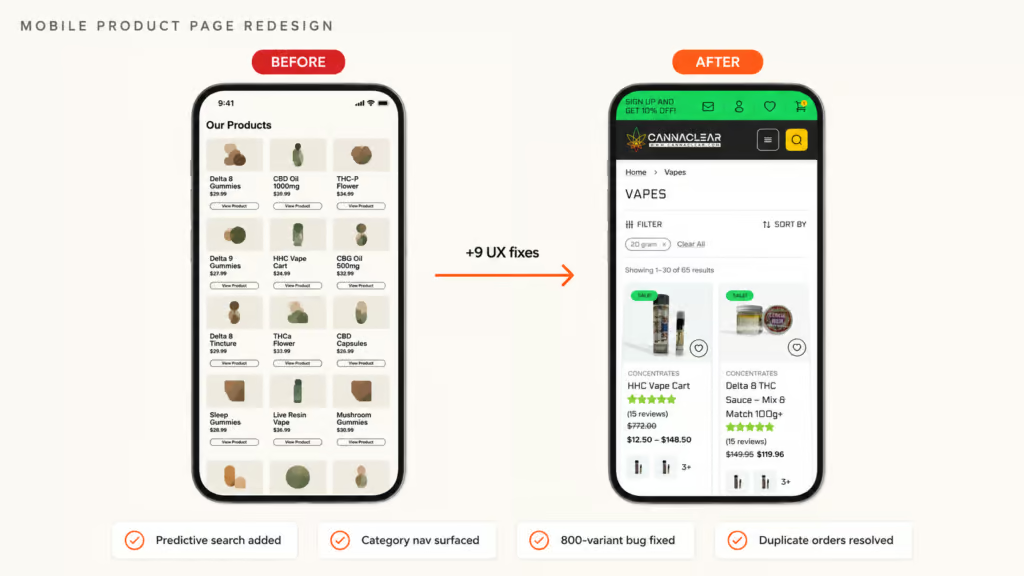
- Categories surfaced in main navigation (previously buried)
- Typo-tolerant predictive search added
- Product listing reworked (3-column to 2-column for mobile readability)
- Homepage restructured with categories at the top for product discovery
Nine weeks start to finish.
We don’t do rebuilds. In 11 years, we’ve never told a client to start over. Cannaclear’s site after we shipped was the same site Devin came to us with – same URL, same content, same orders, same customer data, same plugin stack running the business. What changed was the theme, the failing UX across product discovery and checkout, the broken integrations, and the performance configuration underneath. Same store, working properly.
Results: Revenue +83%, AOV +58%, Orders +16%
| Metric | Change |
|---|---|
| Mobile PageSpeed | 45 → 95 out of 100 |
| Average order value | $67.05 → $105.94 (+58%) |
| Orders | +16% |
| Revenue | +83% |
Average order value climbed 58%. Same customers, far more spend per transaction.
This is the pattern we see consistently across clients. When a site loads in half a second and product discovery is reworked, visitor behavior changes. They stay longer. They look at more products. They find things they didn’t know they were looking for and add them to the cart. A slow, hard-to-navigate site forces a transactional mindset – buy what brought you there and leave. A fast, easy-to-navigate site invites exploration. Cannaclear’s 58% AOV lift is the quantitative version of that shift.
Orders climbed 16% on top of that. Combined, revenue jumped 83%.
“Thank you kindly for all your help today and going above and beyond to get us back on track.”
Devin Adams, Founder, Cannaclear
“The 90%+ page score is exciting and speaks well to the performance improvements being targeted.”
Dakota Jaymi, Co-founder, Cannaclear
If your WooCommerce store looks like this
If you’re an owner-operator who’s also the developer, the problems on your site probably aren’t unknown to you. They’re known and unaddressed because the risk of breaking the business outweighs the cost of leaving them broken. That calculus changes when the broken things start to compound – when a 70% revenue drop becomes the cost of not touching them.
If you’re in a restricted vertical where Facebook and Google ads aren’t an option, organic traffic is everything. The slowest page on your site is your worst salesperson, and you can’t pay your way around them.
And you probably don’t need to go headless to solve any of this. We sold Cannaclear headless. Then we talked them out of it. That should tell you something about what we think is the right answer most of the time.
Frequently asked questions
Do you work with Delta 8, THC, or cannabis WooCommerce stores?
Yes – restricted verticals are one of our core focus areas. Delta 8 THC, cannabinoids (CBD/hemp), and cannabis (THC where legal) are categories Shopify has historically restricted and mainstream agencies avoid. We specialize in making WooCommerce perform for these stores, where the platform is a necessity and not a preference.
Can you resolve a WooCommerce store’s problems without starting over?
Almost always. We preserve the SEO equity, the plugin stack that runs the business, the subscriptions, the customer history – and resolve the performance and UX problems sitting on top of them. Cannaclear went from a PageSpeed of 45 to 95 without breaking the existing setup. We sold them headless originally, then pivoted to a standard build mid-project because the standard build was going to deliver the same outcome at a fraction of the complexity.
Why is mobile PageSpeed critical for restricted-vertical stores?
Because organic search is the only channel that works. Facebook, Instagram, Google, and TikTok all restrict ads for CBD, hemp, Delta 8, firearms, and cannabis. That means every visitor is hard-won – mostly through SEO and content – and a slow site converts them at a fraction of the rate a fast site does. There’s no paid ad budget to mask the problem. Performance is the conversion lever.
What is headless WooCommerce and do I need it?
Headless WooCommerce decouples the storefront (the frontend) from the WordPress admin and database, replacing it with a separately-built frontend that talks to WooCommerce via an API. It can deliver excellent performance, but it adds complexity, infrastructure cost, and ongoing maintenance overhead. Most stores doing under $3M in annual revenue don’t need it – a properly optimized standard WooCommerce build now delivers indistinguishable performance for a fraction of the cost. We sold Cannaclear headless and then talked them out of it. That should tell you what we think the right answer is most of the time.
How long does a WooCommerce performance optimization take?
Cannaclear was delivered in 9 weeks. Most projects deliver in 4-12 weeks depending on store complexity, plugin count, custom development needs, and scope of UX work. Restricted-vertical stores with payment processor complexity sometimes take longer because of the additional infrastructure decisions involved.
Why did Cannaclear’s average order value go up 58% after optimization?
When a site loads in half a second and product discovery is reworked, visitor behavior changes. They stay longer, look at more products, and find things they didn’t know they were looking for. A slow site forces a transactional mindset – buy what brought you there and leave. A fast site invites exploration. AOV is the quantitative version of that shift. The 58% AOV lift on Cannaclear came on the same customers placing larger basket sizes per order.
What happens when Google Analytics breaks on a WooCommerce store?
You lose the ability to see what’s happening. Cannaclear’s GA was broken for six to eight months. Devin thought his traffic was 70,000/month and his conversion rate was 1.8%. The actual conversion rate was closer to 0.6% – meaning real revenue was leaking and there was no way to identify the leak. Restoring analytics is one of the first things we do on any audit, because every decision after that depends on accurate data.
Can WooCommerce handle products with hundreds of variants?
Yes, but variant-heavy products are one of the most common sources of plugin conflicts and performance degradation. Cannaclear had a single product with 800 variants (50 strains across multiple quantities) that broke completely whenever the subscriptions plugin was enabled. The answer isn’t to reduce the variants – it’s to resolve the underlying plugin conflict and architect the variation logic correctly. Once the conflict was resolved, the 800-variant product ran with subscriptions enabled.
What does the “owner-developer trap” mean?
It’s the position a lot of technical WooCommerce store owners find themselves in: they built the site themselves, so every change carries the risk of breaking what’s already running the business. They know what’s broken. They could probably resolve it. They don’t, because the downside risk of touching production code feels higher than the cost of leaving it broken. The broken things slowly bleed revenue until the compound damage forces the issue.
How do you recover from a major revenue drop on WooCommerce?
Restore analytics first, so you can see the real numbers. Then audit the technical layer (PageSpeed, plugin conflicts, broken integrations) and the UX layer (scored against ecommerce UX research on mobile and desktop) in parallel. Identify which resolutions carry the most revenue impact, sequence them by risk, and execute. Cannaclear went from a 70% twelve-month decline to an 83% revenue lift in 9 weeks using exactly that approach.
The pattern: restricted vertical, owner-built, broken in plain sight
Cannaclear is the second restricted-vertical case study we’ve shipped this quarter where the headline outcome wasn’t more traffic – it was the same visitors finally being able to buy. Mobile PageSpeed 45 to 95. AOV $67 to $106. Revenue +83% in nine weeks. Done without going headless, without breaking the SEO equity, without losing the plugin stack that runs the business.
If you built your store yourself and the broken things have stayed broken because you’re afraid to touch them – that’s the trap. If you’re in a category Facebook and Google won’t let you advertise on – that’s the constraint. Both at once is harder than either alone, but neither is fatal. Cannaclear is the proof.
If your developer’s only answer is a rebuild, or your platform’s only answer is to replatform, or your own answer has been “I’ll get to it” for the last twelve months – get a second opinion before the next quarter passes.
Get my Revenue Recovery Audit
We score your store against the same 245-point Baymard standard we run on every audit, benchmark your mobile PageSpeed, and send the findings within 7 days – each gap ranked by revenue impact.
Get My Revenue Audit →Every gap is tied to a dollar figure and a priority.
Talk directly with Campbell
Founder · 11 years WooCommerce
Schedule a strategy call
30 minutes with Campbell on your UX and performance challenges with WooCommerce – especially if you’re in a restricted vertical where paid ads aren’t an option.
Schedule My Strategy Call →30 minutes. No pitch – an honest assessment of where you stand.