

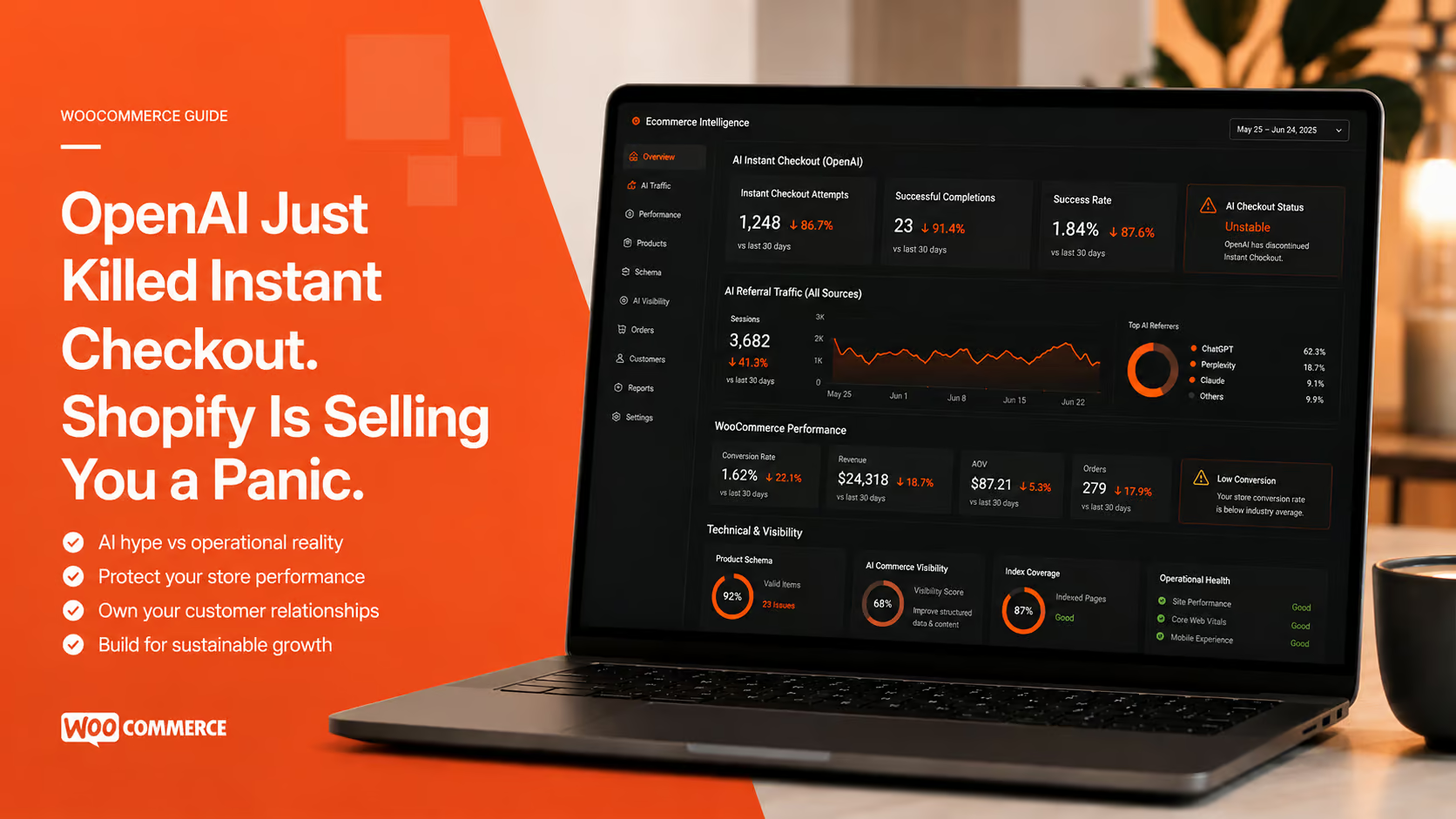
Two weeks ago, OpenAI quietly killed the most-hyped feature in ecommerce. On March 24 they published a blog post admitting that Instant Checkout – the in-chat purchasing flow they launched with Stripe, Etsy, Walmart, and a handful of Shopify brands last September – wasn’t working. They’re pivoting to a model where ChatGPT handles product discovery and then punts the actual transaction back to the merchant’s own storefront. Which is, if you’re paying attention, how Google Shopping has always worked.
Meanwhile Shopify is running the opposite playbook. Their agentic commerce marketing has reached a fever pitch. “Millions of merchants can sell in AI chats.” “One click and your products are everywhere AI conversations happen.” The implicit message to everyone on WooCommerce: you’re being left behind, and you need to come to Shopify to fix it.
I want to talk about what’s true here, because the gap between the pitch and the reality is wider than most people realize.
The TL;DR:
- OpenAI’s flagship in-chat buy button converted below 1% – against an industry average of 3-4%. Of millions of eligible Shopify merchants, about a dozen went live.
- Adobe and BrightEdge both measure current LLM referral traffic at under 1% of total ecommerce sessions. Real growth, but from almost nothing.
- WooCommerce is already a launch partner for Stripe’s Agentic Commerce Protocol. Native MCP support shipped in WooCommerce 10.3. The capability is here.
- Shopify’s advantage is packaging, not infrastructure. Their version is turnkey; WooCommerce requires a plugin and an hour of configuration.
- Replatforming to chase agentic commerce solves a problem you don’t have with a solution that doesn’t fully work yet.
Three small things this quarter – GA4 setup, llms.txt, product schema – will position you for whatever shakes out, without spending six figures on a migration to chase a pitch.
What happened with OpenAI’s Instant Checkout
Walmart’s EVP of product told Wired that conversion rates on items sold through ChatGPT were roughly a third of what Walmart got on their own site. OpenAI’s buy button was converting below 1% – against an industry average of 3 to 4%.
Of the millions of Shopify merchants who were theoretically eligible, about a dozen went live. And the infrastructure was half-built: no sales tax collection, no fraud prevention, no real-time inventory sync, single-item carts only.
The reason the flagship agentic commerce feature of the world’s most-used chatbot didn’t work isn’t some deep philosophical problem with AI. It’s that the thing was shipped before it was ready, and users could tell. OpenAI may relaunch a v2 of Instant Checkout – they probably will. But the pattern is the one that matters: agentic commerce pitches keep outrunning agentic commerce reality. Anyone replatforming today to catch the wave is replatforming for v1 of a v3 problem.
What Shopify is selling – and what they leave out

Credit where it’s due. Shopify Catalog is a real piece of engineering. The admin toggle does push your products into ChatGPT, Microsoft Copilot, and Google AI Mode. If you run a Shopify store in the US, it works. I’m not going to pretend otherwise.
But the pitch glosses over several things that would matter to anyone making a platform decision.
- Perplexity requires a separate application and routes checkout through PayPal, not Shopify.
- Claude isn’t integrated at all.
- In January, Shopify auto-enrolled US merchants into agentic shopping without explicit consent. If a WooCommerce plugin did that we’d call it a dark pattern.
So when you see “millions of merchants can sell in AI chats,” what that means is: some merchants, in some chats, on some surfaces, in one country, with one payment processor, sometimes by default whether they wanted it or not.
What the data shows about AI referral traffic
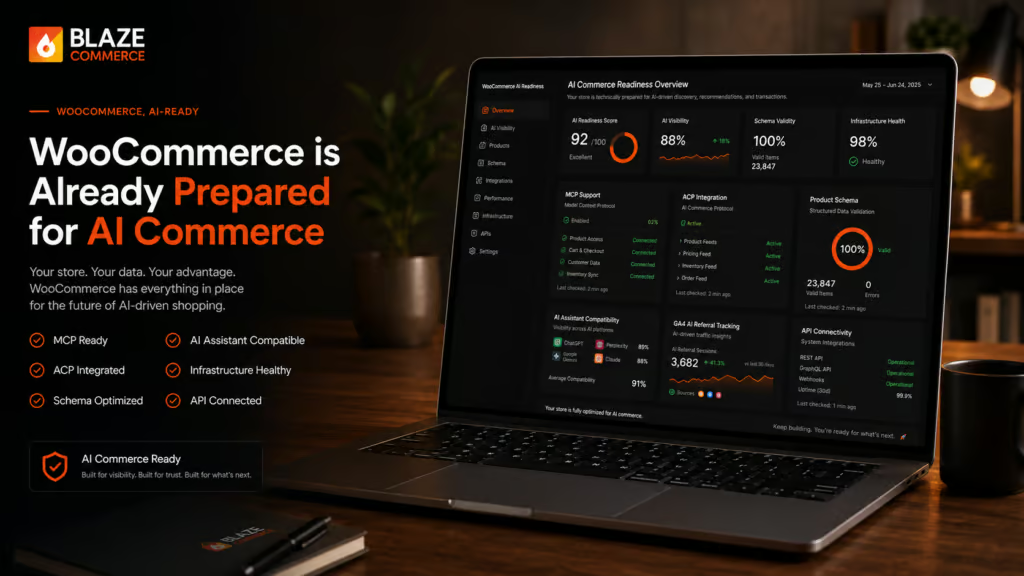
We audited Google Analytics across 10 to 15 client stores last quarter, looking for the great traffic shift we keep reading about. What we found was a handful of stores with any detectable LLM referrals at all, and exactly one store with conversions attributed to them – at around 2%, well below that store’s normal channels.
This tracks with the published data. Both Adobe and BrightEdge put current LLM referral traffic at under 1% of total ecommerce sessions. The growth rate is steep – Adobe measured 693% year on year over the holidays – but it’s growing from almost nothing.
A brief caveat, because I’d be misleading you if I didn’t mention it: GA4 is known to undercount LLM traffic by a factor of three to five. Users research in ChatGPT, then type your brand into Google, then buy. The sale gets attributed to organic search. So the real influence of LLMs is larger than the referrer data suggests. But even generous adjustments don’t get you anywhere near “this is a material channel today.”
If you’re a mid-market WooCommerce store owner, panic-migrating to Shopify because of the agentic commerce pitch is solving a problem you don’t yet have with a solution that wouldn’t fully work anyway.
Have us audit your AI-readiness directly.
You can spend weeks figuring out which LLMs are sending you traffic, which products are getting picked up, and whether your schema is firing. Or we can tell you in 7 days – with the exact gaps to resolve.
- ✓GA4 + LLM referral audit
- ✓Product schema verification
- ✓No contracts, ever
No contracts. See real data from your actual store before any commitment. We’ll show you exactly where your AI visibility is – and what it would take to improve it.
What Shopify reps won’t tell you about WooCommerce and AI commerce
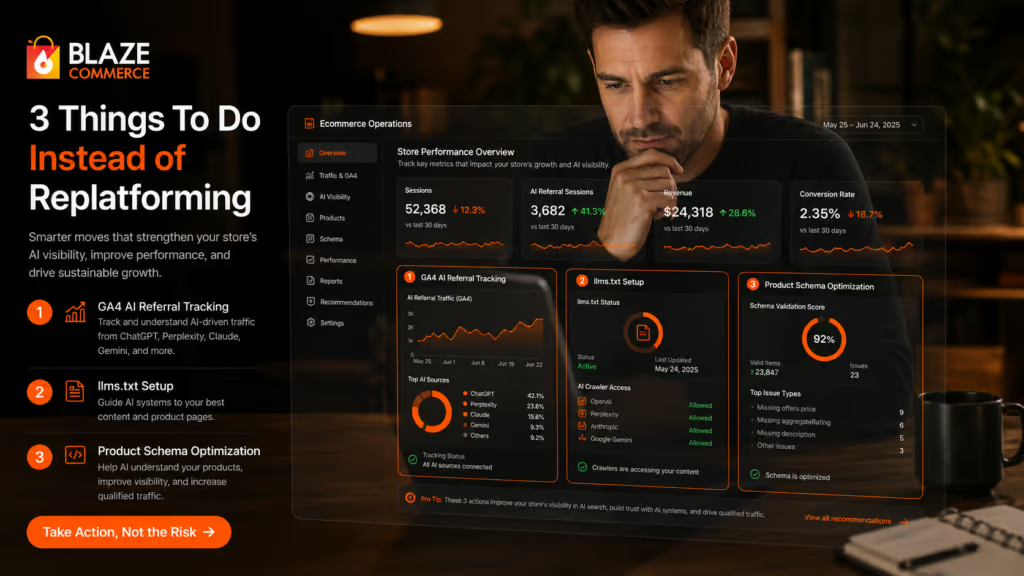
WooCommerce is on the list.
In December, Stripe launched their Agentic Commerce Protocol and named WooCommerce as a launch partner – same tier as Wix, BigCommerce, Squarespace, and commercetools.
Beau Lebens, WooCommerce’s Head of Engineering, published a public roadmap in October laying out native MCP support (which shipped in WooCommerce 10.3), ACP integration via Stripe, and the protocol work behind it. The WordPress plugin directory already has multiple free plugins that wire WooCommerce into the Agentic Commerce Protocol today.
This isn’t theoretical work on some future roadmap. It’s shipped. It’s not pre-installed, because WooCommerce has never been a walled garden and never will be.
The thing Shopify is better at is packaging. Their version is turnkey; WooCommerce, done right, requires a plugin and an hour of configuration. That’s a real tradeoff, not a lie. But the underlying capability is there, and the protocol support is there, and the partnerships are there. The “you’re being left behind on AI” pitch sells well precisely because most operators don’t know any of this.
Three things to do this quarter instead of replatforming
Not a replatform. Three small things that cost you an hour or two and position you for whatever shakes out.
1. Set up a custom channel group in GA4
So you can see your AI referral traffic in standard reports going forward. Admin → Data Display → Channel Groups → create a new channel above “Referral” that matches sources like:
chatgpt.com|openai.com|perplexity.ai|gemini.google.com|copilot.microsoft.com|claude.aiFrom that point on you’ll have a baseline you can track, and you won’t have to go fishing through acquisition reports every time someone asks about AI traffic.
2. Install an llms.txt plugin
Website LLMs.txt on the WordPress directory is a good starting point. It generates the file AI crawlers look for when they’re deciding what to index and how to describe your store. Five minutes of work, and you’re doing something 95% of stores haven’t got around to.
3. Audit your product schema
This is the one that matters most. ChatGPT and Perplexity don’t maintain their own product databases – they pull from Google Shopping and from structured data on your product pages.
A clean Google Shopping feed and complete schema.org Product markup (with GTIN, brand, price, availability, and aggregate rating populated) is the actual currency of AI product discovery. If you’re already running Rank Math or Yoast WooCommerce SEO, most of the plumbing is there; you need to verify it’s firing correctly on every product page. If you’re not, now’s the time.
That’s the whole job for this quarter. Set up the measurement, publish the llms.txt, resolve the schema. When the protocol wars settle and one of the hyperscaler plays starts sending meaningful traffic, you’ll be ready. And you won’t have spent six figures replatforming to chase a pitch that OpenAI publicly admitted didn’t work.
Want us to set up all three for you?
GA4 channel group, llms.txt configuration, full product schema audit and resolution. 7 days. Done properly the first time. You get the measurement baseline and the AI visibility positioning without spending a weekend on it yourself.
Start My Audit →No contracts. We’ll audit what you have, resolve what’s broken, and you’ll have a working baseline by week two.
Plain-language summary: OpenAI scaled back its in-chat Instant Checkout after it converted below 1%. Shopify markets AI commerce as a reason to switch platforms, but WooCommerce already supports the same infrastructure through Stripe’s Agentic Commerce Protocol and native MCP in WooCommerce 10.3. AI referral traffic is still under 1% of ecommerce sessions. Instead of replatforming, this article recommends three low-cost steps: set up a GA4 channel group, install an llms.txt plugin, and verify product schema. All images in this article include descriptive alternative text, and the headings follow a logical reading order.
Frequently asked questions
Can WooCommerce stores sell in ChatGPT?
Yes – through structured data and product schema, not a native checkout integration. ChatGPT pulls product information from Google Shopping feeds and schema.org Product markup on your pages. Complete schema and a clean feed put your products into ChatGPT’s discovery surface today. A native one-click checkout flow comparable to Shopify Catalog requires the Stripe Agentic Commerce Protocol, which has free plugins available in the WordPress directory.
Is Shopify really ahead of WooCommerce on AI commerce?
On packaging, yes. On capability, less than the marketing suggests. Shopify Catalog is a single admin toggle. WooCommerce requires installing the Stripe ACP plugin and configuring it. The underlying protocol support, MCP integration in WooCommerce 10.3, and Stripe partnership are all live. The difference is roughly an hour of configuration work, not a platform gap.
How much traffic is coming from LLMs today?
Under 1% of total ecommerce sessions, according to Adobe and BrightEdge. Growth rates are steep – Adobe measured 693% year-on-year over the holidays – but the base is still very small. GA4 also undercounts LLM traffic by a factor of three to five because users research in ChatGPT and then buy through branded search, which attributes to organic.
What is the Agentic Commerce Protocol?
An open standard launched by Stripe in December 2025 for letting AI agents complete purchases on behalf of users. WooCommerce, Wix, BigCommerce, Squarespace, and commercetools were named launch partners. It’s the infrastructure layer underneath features like ChatGPT’s Instant Checkout – but designed to work across any platform, not lock merchants to one.
Should I replatform to Shopify to get AI commerce features?
Not for that reason alone. The migration cost is $25K-$50K+, plus 5-10% SEO traffic loss for 3-6 months, plus ongoing app fees. AI referral traffic is currently under 1% of sessions across the entire industry. Solve for the channels driving your revenue today, position for AI through schema and llms.txt, and reconsider in 12 months when the data is clearer.
What is llms.txt and do I need one?
llms.txt is a file at the root of your domain that tells AI crawlers what your site is about, how to describe it, and what content to prioritize. It’s the AI-era equivalent of robots.txt for search engines. A WordPress plugin generates it automatically based on your site content. Five minutes of work; 95% of stores haven’t done it.
Why did OpenAI’s Instant Checkout fail?
Multiple reasons. Conversion was below 1% versus a 3-4% industry average. Walmart’s EVP told Wired that ChatGPT conversions were a third of their own site. Only about a dozen Shopify merchants out of millions of eligible ones went live. The feature was missing sales tax collection, fraud prevention, real-time inventory sync, and multi-item carts. It was shipped before it was ready, and shoppers could tell.
Will WooCommerce get the same in-chat checkout features Shopify has?
The capability is already live via Stripe’s Agentic Commerce Protocol. The difference is packaging – Shopify offers it as a single toggle, WooCommerce offers it via free plugins. Native one-click ACP integration is on WooCommerce’s public roadmap and partial functionality has shipped in WooCommerce 10.3.
What’s the difference between MCP and ACP?
MCP (Model Context Protocol) is how AI assistants like Claude and ChatGPT access information about your store and products. WooCommerce 10.3 shipped native MCP support. ACP (Agentic Commerce Protocol) is how AI assistants complete a purchase on the user’s behalf. WooCommerce supports ACP through Stripe’s plugin. You need both for a full agentic commerce experience.
How do I track AI traffic in GA4?
Create a custom channel group in GA4 Admin → Data Display → Channel Groups. Add a new channel above “Referral” that matches sources like chatgpt.com, openai.com, perplexity.ai, gemini.google.com, copilot.microsoft.com, and claude.ai. Going forward, all AI referral traffic appears in standard acquisition reports instead of being lost in “Other Referral.”
The AI commerce pitch is louder than the AI commerce reality. Position for both.
The agentic commerce future will arrive. It’s not arriving on the timeline the marketing suggests, and it’s not arriving as a Shopify-exclusive event. WooCommerce is already in the room. Stripe partnered with us at the same tier they partnered with Wix and BigCommerce. The protocol work has shipped. The plugins exist. The capability is real.
What’s also real: spending six figures to replatform today to capture a channel that’s running at under 1% of sessions is the most expensive way to solve a problem that doesn’t yet need solving.
Set up the GA4 tracking. Publish the llms.txt. Audit your schema. Reassess in twelve months when the actual numbers are visible. That’s the playbook.
Get my free AI-readiness audit
We’ll audit your GA4, llms.txt status, and product schema and send specific findings within 7 days – what’s working, what’s missing, and what to resolve first.
Start My Audit →No contracts. See real data from your actual store before any commitment.
Talk directly with Campbell
Founder · 10 years WooCommerce
Start my WooCommerce Revenue Audit
The $995 audit reviews your store’s AI visibility and the channels driving revenue today, then gives you the honest read on what matters this quarter – whether or not you work with us.
Start My Audit →A specific, numbered set of findings – no pitch, an honest assessment.