

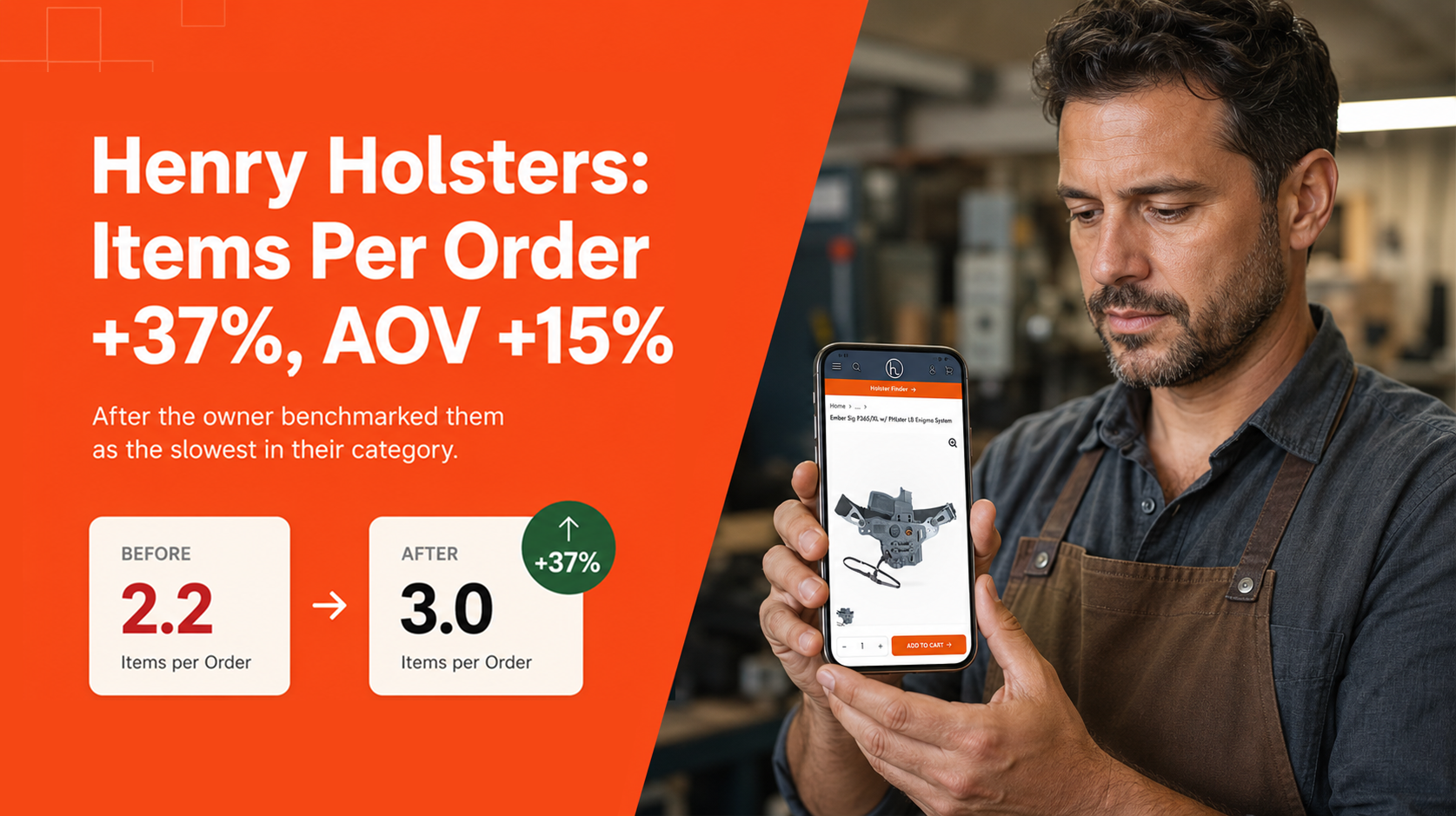
When Andrew Henry of Henry Holsters first spoke with us, he’d already done the diagnosis himself.
Andrew is a CNC machinist and product designer by trade. The founder. His main business is OEM manufacturing – designing and producing parts for other firearms brands, like a ghost kitchen for the industry. Henry Holsters is the retail line. It accounts for around 20% of revenue, but it’s the highest-margin channel in the entire business.
A few months before he spoke with us, Andrew had benchmarked his site against five competitors. They were friends of his. Some of them, he manufactures parts for.
“I benchmarked us against 4 or 5 of my friend’s companies that are all in the same space… we were consistently the slowest out of the 5 or 6 that I looked at on almost everything.”
Andrew Henry, Founder, Henry Holsters
He didn’t need anyone to tell him there was a problem. He needed someone who could do something about it.
The TL;DR:
- Average order value up 15%: $120 → $138. Same customers, more spend per transaction on the highest-margin channel in the business.
- Items per order up 37%: 2.2 → 3.0. The reworked product page surfaced accessories where customers could see them. They started buying the holster and the belt clips, options, and attachments.
- Mobile PageSpeed 56 → 95 out of 100. With 70% of traffic on mobile, the gap between 56 and 95 was costing them every day.
- Platform ceiling, not team ceiling. Andrew’s COO Ben moved PageSpeed from 56 to 62 in one morning. Competent work – but 62 was the ceiling of what an in-house operator can do against WooCommerce’s out-of-the-box UX defaults and Elementor’s rendering overhead.
- Delivered Dec 4, 2025. Tier 1 firearms vertical. D2C is 20% of revenue but the highest margin in the business – which is exactly where the reworked purchase journey now compounds.
A note before we start: this case study gets into PageSpeed scores, UX failures, and the WooCommerce build underneath them. If that’s your world, the detail is all here. If it isn’t, the short version is simple – Henry Holsters’ store was slower and harder to buy from than its competitors’, we resolved that on the same site they already had, and the same customers started spending more. Skip to the FAQ for what that means for your store.
The owner-diagnosed problem: slowest in their own category
Most clients who reach us know something is wrong. Few have ranked themselves against their direct competitors before the first call. Andrew had. He’d run his site against five businesses he knew personally – some of them his manufacturing customers – and watched his store come last on almost every metric he checked.
That’s an unusual starting point. It collapses the discovery phase. We don’t have to convince Andrew there’s a problem. We don’t have to walk him through PageSpeed scores or UX violations to build the case. The diagnosis is on the table before we sit down. What’s left is the execution – the work he and his COO Ben can’t do internally because the platform itself is the ceiling.
What was broken
Our diagnostic process looks at four layers – UX, performance, analytics, and the underlying WooCommerce build – developed across 11 years and hundreds of WooCommerce engagements. On Henry Holsters, the failures clustered in the UX of the purchase journey and the performance underneath it. For the UX layer we draw on the Baymard Institute’s ecommerce research alongside the patterns we’ve seen across hundreds of stores; against that standard, the site rated poor across the board on both mobile and desktop.
The failing areas, in order of impact on the purchase journey:
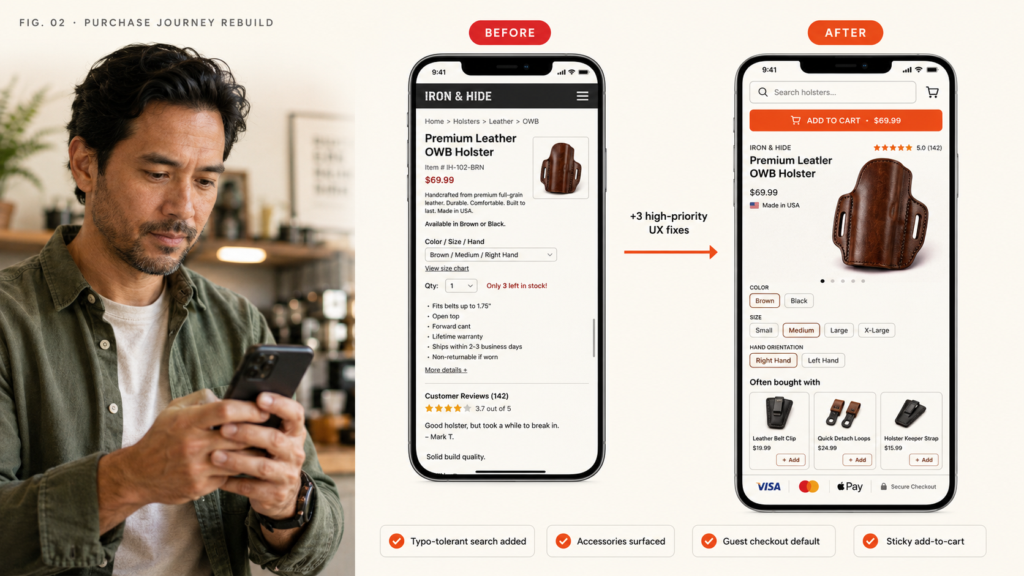
- Product discovery: on-site search wasn’t prominent on mobile. No typo-tolerance. Categories buried in the menu structure. Around 40% of ecommerce visitors use site search to find what they’re looking for – Henry Holsters was making them work to find it.
- Product page: rated adequate. Customers making purchase decisions weren’t getting all the supporting information they needed at the point of decision.
- Cart and checkout: rated poor. Guest checkout wasn’t the default. The place-order button sat below the fold at the review step. The primary CTA wasn’t uniquely styled – customers had to look for it.
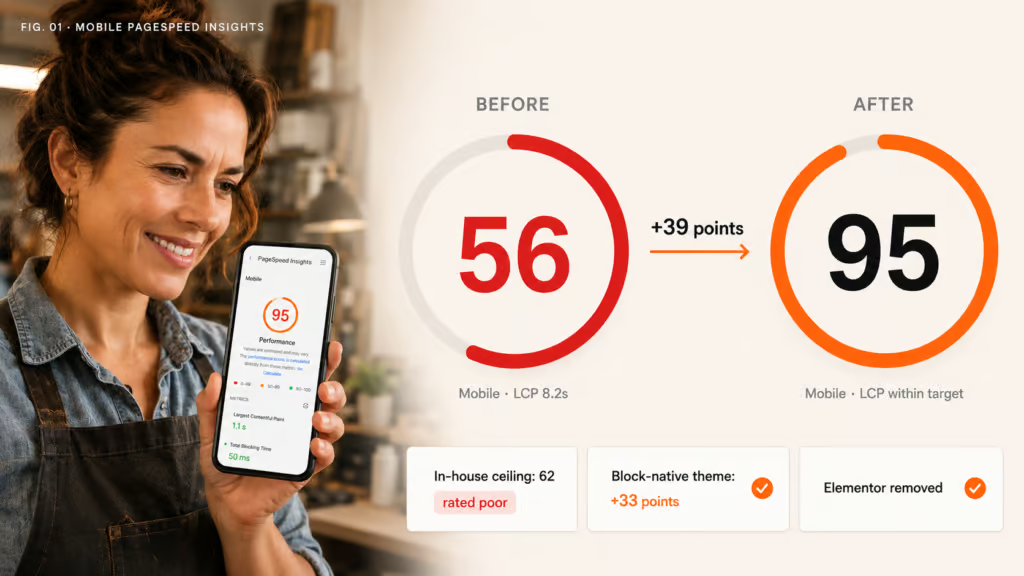
Performance was one of the failing areas. Mobile PageSpeed was 56 out of 100. Largest Contentful Paint was 8.2 seconds – Google wants 2.5. With 70% of Henry Holsters’ traffic on mobile, those numbers were costing them every day.
Andrew is unusual: he doesn’t shop from his phone, doesn’t keep browsers on it, runs it in grayscale. He’d never critically reviewed the mobile site. That’s not unusual for ecommerce owners. Most don’t.
Why this hadn’t been solved
Andrew is hands-off on the website. Used to manage it years ago, stepped back to focus on manufacturing and product design.
His COO, Ben Crum, runs the website operationally. Andrew is clear about Ben’s situation: he keeps the site functioning, but optimization isn’t his skill set.
The morning of our discovery call, Ben got PageSpeed up from 56 to around 62 by adjusting caching and resolving conflicts between Cloudways and Cloudflare. A 40% improvement in First Contentful Paint in one morning. He’s competent. But 62 was the ceiling of what they could do internally – and 62 still rates poor on Google’s scale.
This is the pattern we see consistently. WooCommerce out-of-the-box has poor UX. There’s no off-the-shelf theme that addresses the fundamental requirements of the purchase journey – not for product discovery, not for the product page, not for cart and checkout. Page builders like Elementor compound the problem by adding performance overhead on top. A capable in-house operator can move things 10-20% in the right direction. They can’t get past the platform itself.
We’ll show you exactly where your store loses revenue.
We audit your store across UX, performance, and conversion, then show you the specific issues costing you orders – each one measured against revenue impact. You get a prioritised list of what’s losing money and what it’s worth to resolve.
- ✓239-point Baymard UX audit
- ✓Core Web Vitals + LCP + CLS benchmark
- ✓SemRush health benchmark
Every finding comes with the revenue it’s costing you and the lift from resolving it. You decide what’s worth doing.
What we did
We don’t do rebuilds. In 11 years, we’ve never told a client to start over. Henry Holsters’ site after we shipped was the same site they came to us with – same URL, same content, same orders, same customer data. What changed was the theme, the failing UX across product discovery, the product page, and checkout, and the performance configuration underneath. Same store, working properly.
The work was reworking the parts of the purchase journey customers use, then making sure those changes loaded in half a second.
UX rework across the purchase journey
- On-site search: restructured with typo-tolerance and autocomplete. Surfaced prominently on mobile. Category structure simplified so customers could navigate from search to product without backtracking.
- Product page: restructured for decision-making – gallery layout, social proof, sticky add-to-cart on mobile, product options laid out instead of buried in dropdowns. Customers landing from organic search on a specific variant could decide without leaving the page.
- Cart and checkout: guest checkout set as default. Place-order button moved above the fold at the review step. Primary CTAs uniquely styled and consistently placed, addressing the checkout UX failures from the audit.
Performance work supporting the rework
- Replaced Elementor with a block-native theme. Elementor had been Ben’s ceiling – the page builder adds rendering overhead WooCommerce can’t optimize around.
- Standard performance optimization across homepage, category, product, and checkout pages.
Delivered Dec 4, 2025.
Results: AOV +15%, Items per Order +37%
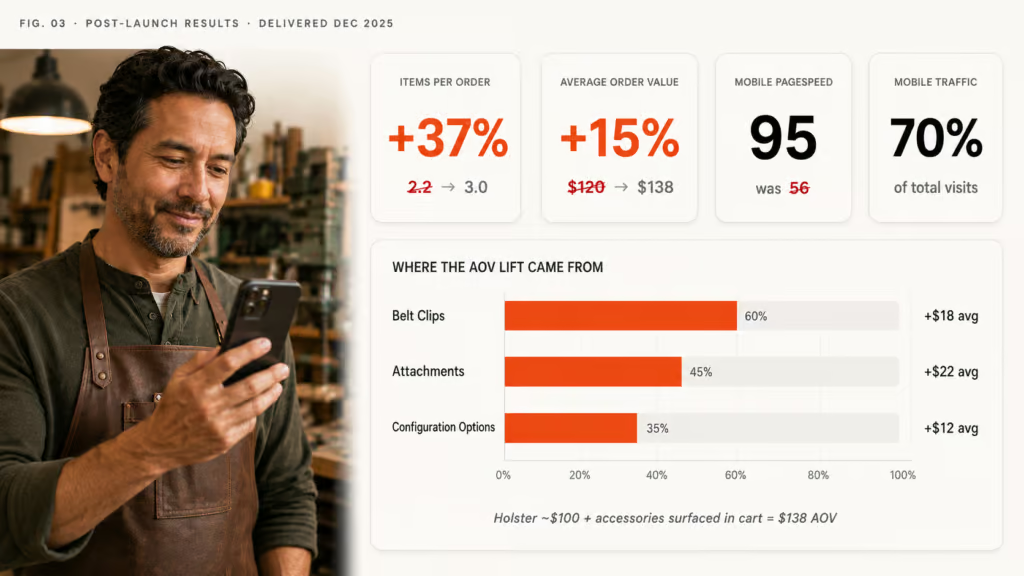
| Metric | Change |
|---|---|
| Average order value | $120 → $138 (+15%) |
| Items per order | 2.2 → 3.0 (+37%) |
| Mobile PageSpeed | 56 → 95 out of 100 |
Average order value climbed 15%. Items per order climbed 37%.
Those numbers happened because the reworked product page surfaces accessories where customers can see them, the cart UX lets people add without friction, and the checkout doesn’t lose them at the final step. Where customers used to buy the holster or the accessories, they now buy both. The holster sits around $100. Add accessories – belt clips, options, attachments – and the cart climbs to $140 or $150. That’s the gap between an AOV of $120 and an AOV of $138.
Mobile PageSpeed 56 → 95 is the foundation that made the UX work effective. Without sub-second page loads, the reworked product page still feels slow. The reworked cart still feels slow. The reworked checkout still loses customers at the final step. Speed alone wouldn’t have lifted AOV 15% – the UX work did that. But the performance work is what made the UX changes register with customers.
“In places where we have both control over the product, control over the marketing, and control over the website, I would love to see us be able to generate more revenue from that D2C channel.”
Andrew Henry, Founder, Henry Holsters
The D2C channel is where Henry Holsters has the most leverage. It’s also where the reworked purchase journey now compounds – more items per order, higher average order value, on the highest-margin sales in the business.
If your WooCommerce store looks like this
If you’ve already benchmarked your store against your category and you’re behind, the diagnosis isn’t your problem. WooCommerce out-of-the-box doesn’t address UX across the purchase journey, and no off-the-shelf theme is going to do it for you. Page builders make the performance side worse. A competent in-house operator can move things 10-20% – but the platform itself is the ceiling. Getting past that ceiling is the work.
If your D2C channel is your highest-margin channel – the way it is for most manufacturer-led brands – that’s also where the gap between average and category-leading compounds fastest. A 15% AOV lift on the highest-margin channel in your business doesn’t read the same as a 15% lift somewhere else. That’s the part most owners undercount before they look at the math.
Frequently asked questions
Do you work with firearms or tactical WooCommerce stores?
Yes – firearms and tactical is one of our Tier 1 verticals. Mainstream agencies and platforms either avoid the category or restrict it outright. WooCommerce is the platform of necessity for most firearms retailers, and we specialize in making it perform for these stores. Henry Holsters, Infinite Defense, and Choice Ammunition are active clients in the category.
Can a capable in-house developer solve WooCommerce performance issues?
To a point. A capable in-house operator can typically move PageSpeed and UX 10-20% in the right direction – tuning caching, resolving plugin conflicts, addressing the obvious issues. Henry Holsters’ COO improved PageSpeed from 56 to 62 in one morning. That’s competent work. But 62 still rates poor on Google’s scale, and that’s the ceiling without reworking the parts of the purchase journey that WooCommerce out-of-the-box doesn’t address.
What is the WooCommerce platform ceiling?
WooCommerce out-of-the-box has poor UX defaults across product discovery, the product page, and cart and checkout. No off-the-shelf theme addresses the fundamental requirements of the purchase journey. A capable in-house operator can patch around the edges, but the platform itself caps how far that work can go – usually around a 10-20% improvement. Getting past that ceiling means reworking the purchase journey on a block-native theme with the UX defaults addressed at the foundation.
Why are page builders like Elementor bad for WooCommerce performance?
Page builders add rendering overhead WooCommerce can’t optimize around. Elementor, Divi, and Avada generate heavier, more complex DOM structures than block-native themes built with WordPress’s full-site-editing approach. The performance penalty is consistent: block-native themes load roughly 40% faster than page-builder-driven themes on the same hosting. Replacing the page builder is one of the highest-impact changes available on most WooCommerce stores.
How do you diagnose a WooCommerce store?
Across four layers, built up over 11 years and hundreds of WooCommerce engagements: UX (how customers find, evaluate, and buy – informed by ecommerce UX research and our own pattern recognition across hundreds of stores), performance (load, render, and infrastructure), analytics (what the data shows about real customer behavior), and the WooCommerce build (theme, plugins, and the patterns introducing fragility). No single layer is the whole picture – the value is in integrating all four. Henry Holsters rated poor across the board before we started.
Why did items per order go up 37% after the project?
Because the reworked product page surfaced accessories where customers could see them, the cart UX let people add without friction, and the checkout didn’t lose them at the final step. Where Henry Holsters’ customers used to buy the holster or the accessories, they now buy both. The holster sits around $100. Add accessories – belt clips, options, attachments – and the cart climbs to $140 or $150. That’s the gap between an items-per-order of 2.2 and 3.0.
What’s the difference between performance work and UX work?
Performance work is about how fast the site loads – PageSpeed, First Contentful Paint, Largest Contentful Paint, Time to First Byte. UX work is about what the site does once it’s loaded – how customers find products, evaluate them, add to cart, and check out. On Henry Holsters, the UX work drove the 15% AOV lift and 37% items-per-order lift. The performance work made that UX register with customers. Without sub-second page loads, the reworked product page still feels slow. Without the UX work, fast loads land on a page that doesn’t convert. You need both.
Can guest checkout really impact average order value?
It impacts conversion before it impacts AOV. Forced account creation is one of the most common reasons US shoppers abandon carts – around 25%, per Baymard Institute research. Once you set guest checkout as the default and the customer completes the transaction, you get the chance to surface accessories or upsells inside the same purchase journey. The AOV lift comes from the combination of guest-checkout-first, accessories surfaced in cart, and a place-order button that doesn’t sit below the fold at the review step.
How do I benchmark my WooCommerce store against competitors?
Run their site through PageSpeed Insights on both mobile and desktop. Walk through their full purchase journey on your phone – product discovery, search, product page, cart, checkout. Note where they’re faster or more polished and where you are. Andrew Henry did this manually against five competitors before contacting us – that’s an unusual but valuable starting point. We can run a formal version across the full purchase journey as part of any audit.
Why is the D2C channel so important for manufacturer-led brands?
It’s typically the highest-margin channel in the business. For Henry Holsters, D2C is around 20% of revenue but the highest margin in the entire business – OEM manufacturing accounts for most of the top line but trades volume for margin. Lifting AOV 15% on the highest-margin channel doesn’t read the same as lifting it somewhere else. That math is why purchase-journey work on D2C compounds harder than equivalent work on wholesale or retail channels.
The pattern: platform ceiling, purchase journey, highest-margin channel
Henry Holsters is the third restricted-vertical case study we’ve shipped where the headline outcome wasn’t more traffic – it was the same customers, finally buying more on the same visit. AOV $120 to $138. Items per order 2.2 to 3.0. Mobile PageSpeed 56 to 95. Done by getting past the WooCommerce platform ceiling that the COO had already pushed up against and couldn’t move further.
If your team is already doing competent work and the numbers aren’t moving the way you want, the gap probably isn’t them. It’s the platform. WooCommerce out-of-the-box has poor UX defaults across the purchase journey, and Elementor or any other page builder compounds the performance side of the problem. A capable internal operator hits a ceiling, the way Ben did. Getting past the ceiling is the work.
If your D2C channel is the highest-margin channel in your business – the way it is for most manufacturer-led brands – the math on lifting AOV there compounds harder than equivalent work anywhere else in the operation.
Get my Revenue Recovery Audit
We score your store against the same 245-point Baymard standard we run on every audit, benchmark your mobile PageSpeed, and send the findings within 7 days – each gap ranked by revenue impact.
Get My Revenue Audit →Every gap is tied to a dollar figure and a priority.
Talk directly with Campbell
Founder · 11 years WooCommerce
Schedule a strategy call
30 minutes with Campbell on your UX and performance challenges with WooCommerce – especially if you’re in a restricted vertical where paid ads aren’t an option.
Schedule My Strategy Call →30 minutes. No pitch – an honest assessment of where you stand.